Week 6 – Contemplation

During the last few days, I have been considering at length my FMP direction, in terms of how to describe it to local people. In order to attract potential contributors, I recognise the need to have a concise, engaging and relevant approach. Such an approach means that I have to describe my project – its […]

Read More…
Week 5 – Off The Reservation

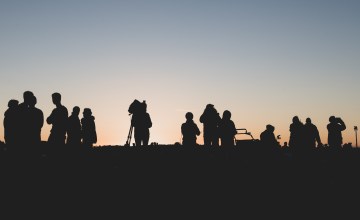
This week I took a break from the river and worked on some images I had captured in late June of the Summer Solstice at Stone Henge. This was purely an experimental piece that looked at how I could develop my practice in terms of capturing people at events. The research for my FMP focusing […]

Read More…

Week 4 – FMP Planning

This week I submitted my main FMP proposal after much consideration. I actually found the whole experience very helpful, in terms of developing my ideas. But also very nerve-racking, as its signing me up to a few months of very challenging work. As an introduction I stated: My Final Major Project (FMP) will focus on […]

Read More…

Week 3 – FMP Proposal Prep

This week has all been spent developing my FMP proposal for submission. I am still not clear how the project could work. It is also way outside of my comfort zone, so an added challenge. Primarily because I would include people as an active part of my work, an element I have avoided during my […]

Read More…

Week 2 – Pecha Kucha Presentation

This week we had the opportunity to show our Pecha Kucha presentation to Wendy and discuss feedback and possible options. We also had a series of past FMP Proposal examples posted on Canvas. These really helped me with looking at how past peers had narrated their planned proposals and what sort of detail was shown […]

Read More…

Week 1 – The Beginning

The opening week to my FMP and I have been excited, yet terrified at the idea. Up until now, my MA has primarily been led by tutorials and research projects. These have been structured and managed within a class environment. The very thought that the next six months will now be spent developing our works […]

Read More…

Week 4 – Signs

“The relation between what we see and what we know is never settled. Each evening we see the sunset. We know that the earth is turning away from it. The knowledge, the explanation, never quite fits the sight.” (Berger, 2008: 7) Images can be more than just two dimensional still frames from an ever moving […]

Read More…

Week 4 – Into the Image World

“The Photograph is an extended, loaded evidence — as if it caricatured not the figure of what it represents (quite the converse) but its very existence … The Photograph then becomes a bizarre medium, a new form of hallucination: false on the level of perception, true on the level of time: a temporal hallucination, so […]

Read More…

Week 3 – Hunters & Farmers

Winogrand once said, “You have got to deal with how photographs look, what is there, not how they are made.” (Winogrand in Diamonstein and Callahan, 1982: 181) As already seen, my working practices are varied, and for a long time, I lacked identity as a photographer. During the duration of this MA, I am finding more […]

Read More…

Week 3 – Constructed Realities

Within an average week, I look at many different photographs. Some intentionally, others I am exposed too through media, advertising and my work. The range of images varies wildly, but the percentage of those that stick with me is relatively small. For me, the images that carry gravitas are ones that showcase the living or […]

Read More…

Week 2 – Further Questions of Authenticity

“Photographs are not simply different from other kinds of pictorial representation in certain detailed respects; on the contrary, photographs are not representations at all. They are the practical realisation of the general artistic ideals of objectivity and detachment.” (Snyder, Walsh Allen, 1975: 175) From previous posts, I have considered the views of Barthes, Szarkowski and Berger. I find […]

Read More…

Week 2 – A Question of Authenticity

“The realists do not take the: photograph for a “copy” of reality, but for an emulator of past reality: a magic, not an art. To ask whether a photograph is analogical or coded is not a good means of analysis. The important thing is that the photograph possesses an evidential force and that its testimony […]

Read More…

Human Choices

Berger once said: “a large part of seeing depends on habit and convention” (Berger 1972: Episode 1) This was especially true in the days before photography when the visual art form was channelled through the medium of a painting, or sculpture. The artist’s ability to recreate a scene and display that to an audience was […]

Read More…

Week 5 – Stronger Together

This week’s lectures are called Stronger Together .. and that has been very much the case. Following last weeks lows around my creative direction, I looked to revisit some of my old methods of photography. Growing up and over the last few years, I use to take images of what I saw to be interesting, […]

Read More…